
Alıcı soruları
- A beginner BBQ tool set should be easy to explain: usually tongs, spatula, fork, and basting brush before extra gadgets are added.
- Retail buyers should check handle comfort, tool length, steel finish, brush head, tong movement, package fit, and warning copy on the sample.
- A clearer RFQ separates the base starter set from private-label artwork, hang cards, color boxes, barcode labels, carton marks, and delivery dates.
Direct answer for retail buyers
A beginner BBQ tool set should cover the basic cooking jobs before it adds more pieces. For most starter programs, that means tongs for turning food, a spatula for lifting, a fork for holding or serving, and a basting brush for sauce. Before ordering, buyers should confirm the sales channel, tool count, handle comfort, steel finish, packaging route, warning copy, sample checks, carton marks, and private-label needs.
Why starter sets fit the current BBQ season
The June Grillive digest included Father's Day grilling gifts, tool roundups, outdoor cooking promotions, and beginner-friendly accessory lists. That demand is useful, but a buyer should not copy a consumer list one item at a time. The better retail question is whether the set gives a new grill owner the first tools they actually need, in a package that makes sense on a shelf or product page.
Start with the four jobs a beginner understands
A starter set is easier to sell when each tool has a clear job. Tongs handle sausages, vegetables, and meat pieces. A slotted spatula lifts burgers and fish more cleanly. A fork helps with holding or serving. A silicone or bristle-style brush supports marinades and sauces, depending on the final product design. If the buyer adds skewers, corn holders, a brush, or a storage case too early, the set can become harder to price, photograph, and explain.
Check handles before approving the sample
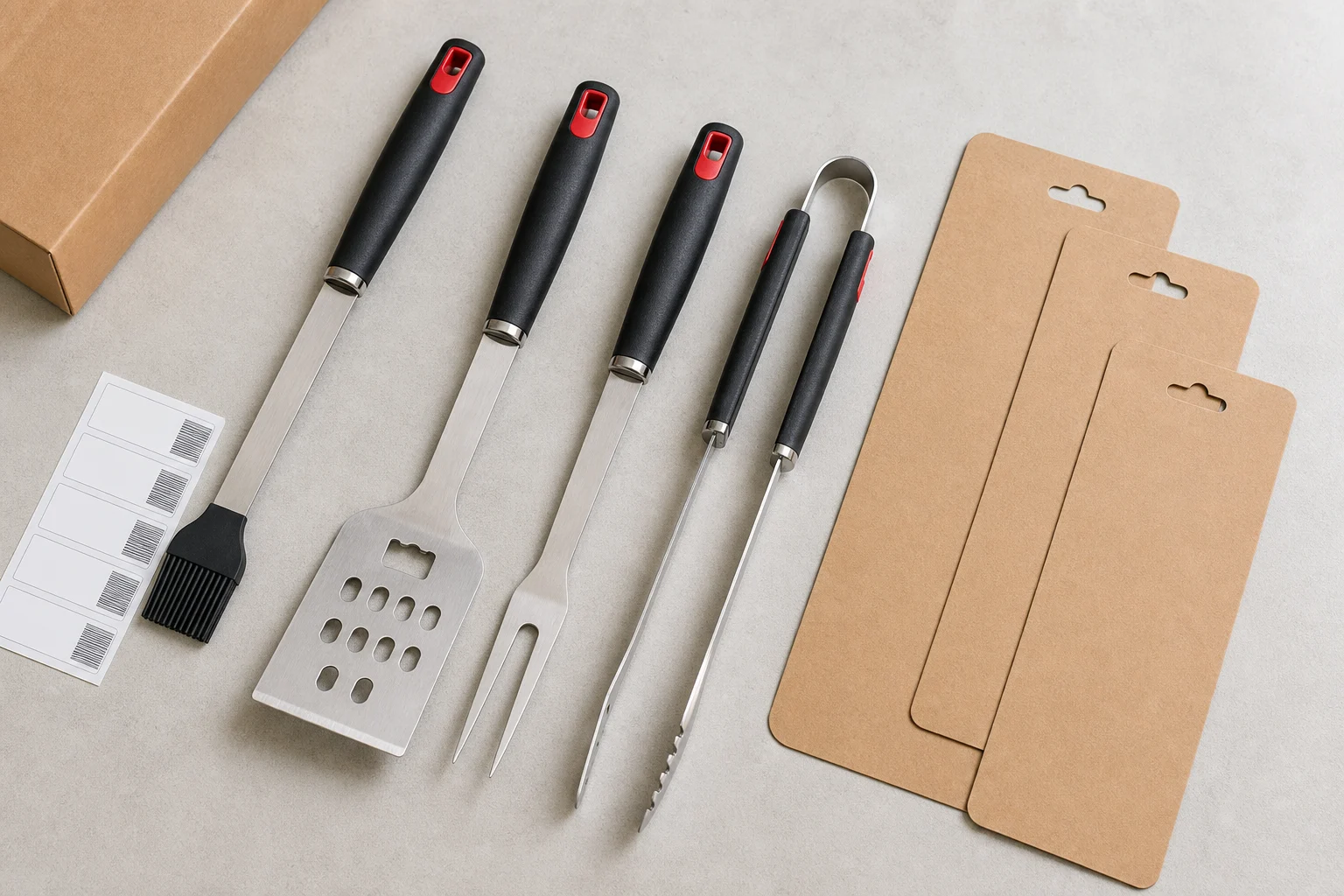
Beginner tools are handled by people who may not grill often, so comfort matters. On the Grillive reference set, the product data lists stainless steel tools with plastic handles. During sample review, hold each tool with a dry hand and with a glove, check whether the handle feels secure, look at the red hanging detail, and confirm that the tool length gives enough distance from heat for the intended use. A low-cost handle can still work if it feels stable and packs cleanly.
Review steel finish, edges, and tool movement
The quotation should state the steel route, tool length, thickness expectation, brush material, tong movement, spatula slot shape, fork point finish, and whether any food-contact coating is used. The sample should feel new, smooth, and consistent. Run a gloved hand along the spatula edge and fork points, open and close the tongs several times, and check whether the brush head is straight and firmly fixed. Do not rely on a top-view product photo alone.
Make packaging simple for first-time shoppers
Beginner sets need packaging that explains the contents quickly. A kraft hang card, color box, sleeve, insert card, or e-commerce carton can all work, but the front should not be crowded with unsupported claims. Leave room for a barcode label, basic heat-use warnings, cleaning notes, and clear tool names. If the set is sold online, confirm packed dimensions and take photos of the loose tools, the packed sample, and the carton.
Keep private-label changes separate
Private-label requests may include logo on the hang card, color box artwork, handle color changes, barcode labels, carton marks, instruction sheets, or a different set count. Some changes are artwork. Others affect MOQ, sample timing, or tooling. List the base four-piece set first, then optional add-ons. This helps the supplier quote the practical starter version before the buyer decides whether to build a larger gift set.
Prepare a quote-ready starter-set RFQ
A useful RFQ includes reference photos or product URLs, target shopper, sales channel, tool count, material expectation, handle requirement, order quantity, destination market, packaging route, private-label artwork needs, barcode requirements, warning copy, carton marks, sample expectations, inspection points, and delivery window. If the buyer is unsure about the range, ask for one basic four-piece set and one upgraded gift-set option rather than mixing both into one unclear quote.
FAQ for beginner BBQ tool set sourcing
What tools should a beginner BBQ set include? Start with tongs, spatula, fork, and basting brush, then add skewers, corn holders, or a case only if the sales channel needs them. What should buyers check first on samples? Check handle comfort, tool length, edge finish, tong movement, brush fixing, package fit, and warning copy. Should the set be sold as a gift set? It can be, but gift packaging, storage cases, and higher piece counts should be quoted as a separate version.
Related sourcing pages
- 4-piece BBQ tool set with plastic handles
Review the Grillive starter tool set used as the image reference for this article.
- BBQ tool set category
Compare starter sets, gift sets, and larger grilling tool kits for retail programs.
- BBQ accessories category
Plan starter tools alongside baskets, skewers, griddle tools, pizza tools, and seasonal add-ons.
- OEM and private label BBQ accessories
Prepare package artwork, barcode labels, warning copy, carton marks, and sample approval details.
- Send an RFQ to Grillive
Share product URLs, target quantity, destination market, packaging route, and sample expectations.