
Koopvragen
- Plastic handles can work in BBQ tool ranges when the tool length, heat distance, handle fixing, and warning copy match the intended use.
- Buyers should test the whole sample, not only the handle material: grip feel, edge finish, spatula stiffness, tong movement, brush fixing, and packed protection all matter.
- Packaging should use plain heat-use and cleaning notes instead of unsupported heat-proof, flame-proof, certified, or restaurant-grade claims.
Direct answer for retail buyers
Plastic-handle BBQ tools are not automatically a problem. The buyer needs to match the handle material, tool length, heat distance, and warning copy to the real cooking job. For a starter set or seasonal retail pack, review the sample in the hand, check how far the handle sits from heat, confirm the fixing points, and keep packaging claims plain. Do not describe a tool as heat-proof or flame-proof unless the buyer has product data and approval for that wording.
Why this question belongs in summer assortment planning
The June Grillive digest again showed interest in grilling gifts, summer tool roundups, safety reminders, and outdoor cooking accessories. That mix creates a practical buying question: can a lower-cost BBQ tool set still feel safe, clear, and retail-ready? Plastic-handle tools often sit in beginner sets and promotion packs, so the handle story needs to be handled before artwork and carton marks are approved.
Start with use distance, not just material name
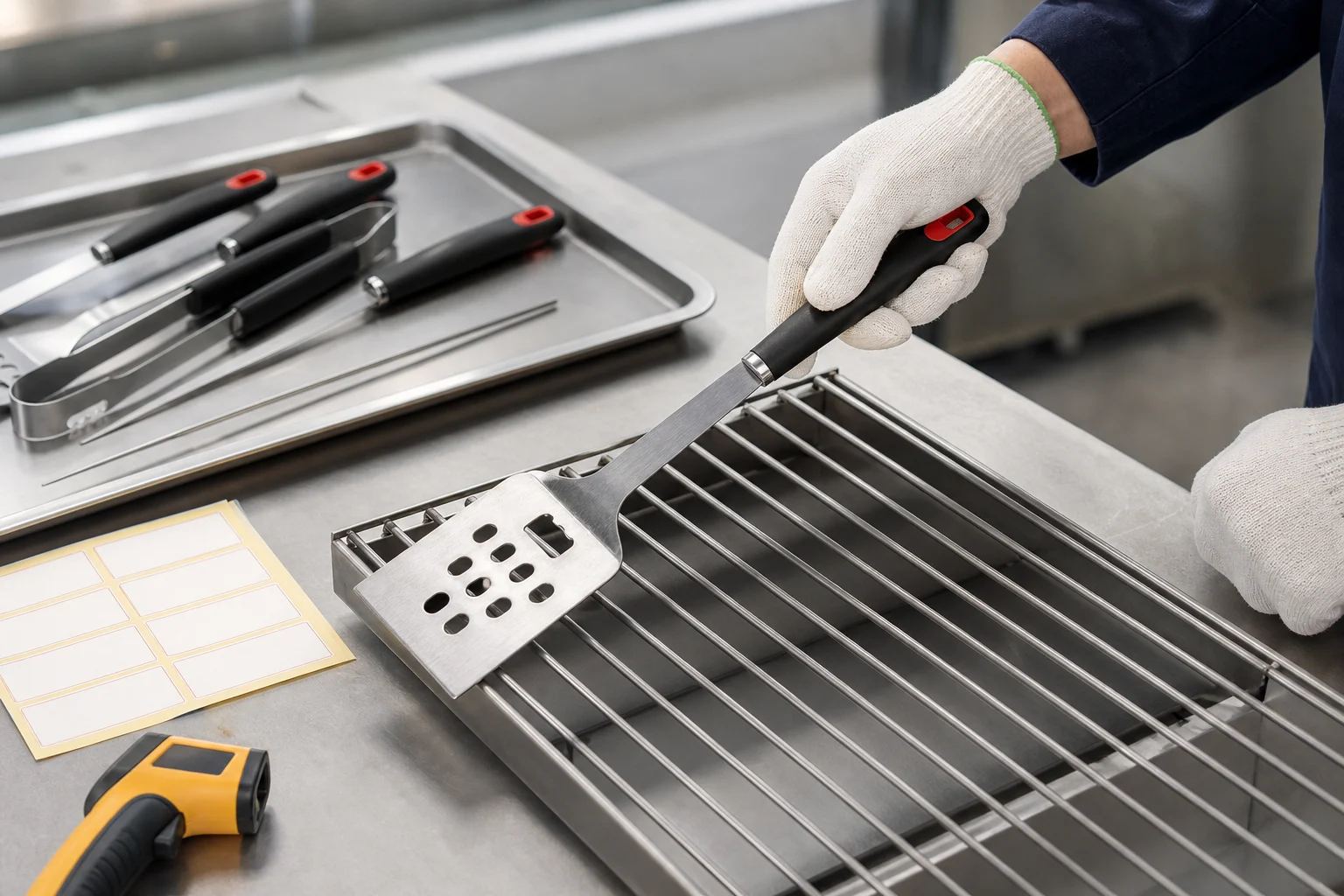
A material name by itself does not tell the buyer enough. The same plastic handle can feel acceptable on a long spatula and questionable on a short tool used close to a hot grate. During sample review, hold the tool with a bare dry hand and with a glove, then check whether the handle position gives enough working distance for the intended use. If the product is meant for a beginner kit, the package should explain basic heat exposure and cooling before storage in simple language.
Check the handle fixing and the metal tool together
Handle comfort is only one part of the sample. Look at the join between plastic and stainless steel, the red hanging detail, the edge finish on the spatula, fork points, tong movement, and brush head fixing. A sample can have a comfortable grip but still feel cheap if the metal flexes too much or the handle shifts under pressure. Take close-up photos of the join and the packed sample so the buying team is not approving from a clean top-view image alone.
Keep heat-use claims modest
Retail packaging often tries to turn a simple tool into a stronger story than the product supports. For plastic-handle BBQ tools, safer copy is usually practical copy: use away from open flame, use gloves when needed, clean after cooling, keep away from children, inspect before use, and store dry. Avoid broad claims such as heat-proof, flame-proof, professional certified, or dishwasher-safe unless those claims are backed by the exact product details and buyer approval.
Plan the label before the final sample
The label route changes the product review. A hang card needs room for tool names, barcode, warning notes, and private-label artwork. A color box needs product photos, dimensions, contents, and carton marks that match the packed item. If the same set will sell in several markets, keep warning copy editable until the importer confirms local language needs. It is easier to adjust the label before photography than after the package has been printed.
What to send in the RFQ
A useful RFQ includes the reference product URL or photos, tool count, handle material preference, tool length, target market, sales channel, order quantity, packaging route, private-label artwork needs, barcode requirements, warning copy needs, carton marks, sample quantity, inspection points, and delivery window. If price is tight, ask for one basic starter-set option and one upgraded handle or packaging option instead of forcing every requirement into one low-price quote.
FAQ for plastic-handle BBQ tool sourcing
Are plastic handles suitable for BBQ tools? They can be, when the tool length, handle fixing, use instructions, and packaging warnings match the cooking job. What should buyers check first? Start with handle grip, heat distance, join strength, tool stiffness, edge finish, and packed protection. Should packaging mention heat limits? It should include practical heat-use and cooling notes, but buyers should avoid unsupported heat-proof or flame-proof claims.
Related sourcing pages
- 4-piece BBQ tool set with plastic handles
Review the Grillive tool set used as the true img2img reference for this article.
- BBQ tool set category
Compare starter sets, gift sets, and larger grilling tool ranges for retail programs.
- BBQ accessories category
Plan plastic-handle tools alongside baskets, skewers, griddle tools, pizza tools, and seasonal add-ons.
- OEM and private label BBQ accessories
Prepare label artwork, barcode areas, warning copy, carton marks, and sample approval details.
- Send an RFQ to Grillive
Share product URLs, target quantity, destination market, packaging route, and sample expectations.