
Buyer takeaway
- Packaging should match the channel: retail shelf, gift set, marketplace listing, or promotional bundle.
- Tool count, storage bag, inserts, and carton efficiency affect both presentation and landed cost.
- Keep artwork, warnings, barcode, and carton marks organized before packaging proofing starts.
Match packaging to the sales channel
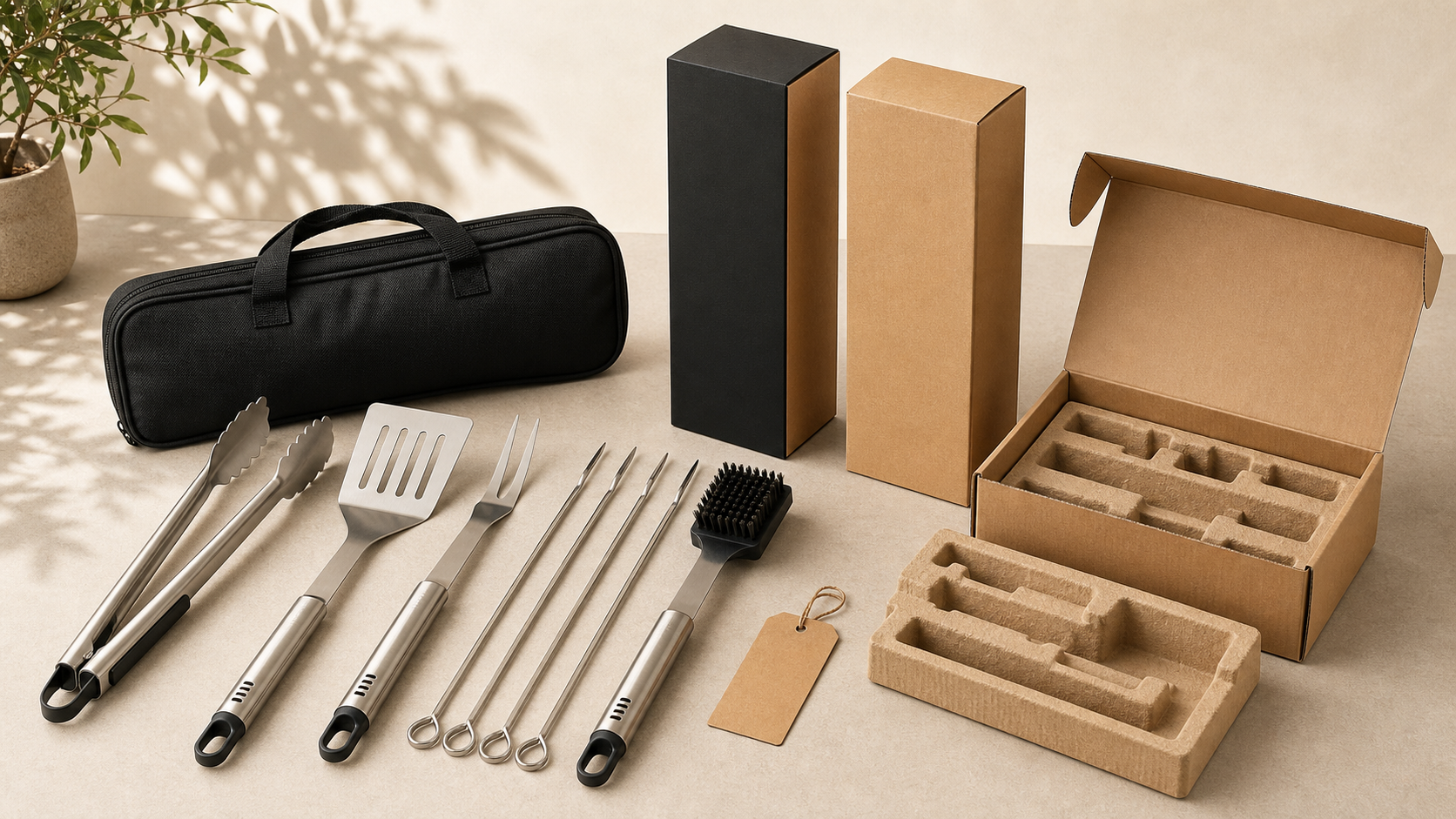
Retail shelves often need a color box, hang tag, window box, or gift-ready presentation. Ecommerce sellers usually care more about product protection, image clarity, carton efficiency, and lower damage risk. The same BBQ tool set can need different packaging depending on whether it is sold as a gift set, marketplace listing, club store bundle, or promotional item.
Make the kit contents obvious
Tool count, tool names, material, handle type, storage bag, cleaning notes, and main cooking scenarios should be easy to understand. Buyers should confirm whether the set includes tongs, spatula, fork, skewers, brush, knife, corn holders, thermometer, or bag, because small changes can affect packaging size and declared product value.
Plan inserts and protection
Heavy stainless steel tools can move during shipment. Buyers should compare tray inserts, tied cards, storage bags, molded pulp, inner boxes, or paper sleeves. The goal is not only a nicer unboxing experience, but also fewer scratches, fewer loose tools, and cleaner product photos after delivery.
Keep packaging files organized
Before approval, prepare logo files, barcode information, warning copy, instruction text, color references, carton marks, and target carton packing. A clean packaging file set reduces proofing rounds and helps the supplier check whether the artwork matches the physical product.